How to Price Your Services: A Framework
Build a pricing strategy for your services: find your true costs, pick cost-plus, market, or value pricing, and use a worksheet to set your rate.


You priced the last job off a gut feeling, and now you are not sure you made money. A solid pricing strategy for services has three steps: find your true cost per billable hour, check that number against what your market pays, then adjust for the value of the job. This guide walks through each step with a worksheet you can finish on your phone.
In This Guide
- Why Do Most Service Prices Come Out Too Low?
- Step 1: Find Your True Cost
- Pricing Worksheet: Your Hourly Floor
- Which Pricing Method Should You Use: Cost-Plus, Market, or Value?
- How Do You Price Parts and Materials?
- Pricing Psychology That Does Not Feel Like a Trick
- Your Price Sets When You Get Paid
- How Do You Know Your Pricing Is Wrong?
- How Do You Raise Rates Over Time?
- Keep Your Prices Consistent
Why Do Most Service Prices Come Out Too Low?
Most service prices come out too low because owners start from what the shop down the road charges, or from what they earned as an employee. Neither number covers what a business actually costs to run.
Take wages. The Bureau of Labor Statistics reports a median pay for heating, air conditioning, and refrigeration mechanics and installers of about $29 an hour. That is what an employer pays a worker. It is a floor, not a billing rate. Your price also has to cover payroll tax, insurance, the truck, tools, licenses, admin time, warranty callbacks, and a profit on top.
The second leak is unbilled time. You may work 2,000 hours a year, but driving, quoting, buying parts, and doing paperwork can leave you billing only 1,000 to 1,300 of them. Every cost has to be recovered from those billable hours alone.
If you hate pricing games, good. This framework has no tricks. It gives you a number you can explain to a customer and defend to yourself.
Step 1: Find Your True Cost
Your true cost is everything it takes to keep the business running for a year, plus what you need to take home. Gather these five numbers before you set any price.
- Take-home pay. What you need to live on, after the business is paid.
- Overhead. Truck, fuel, tools, insurance, phone, software, licenses, and card fees. If you have never added these up, the guide to business overhead expenses shows what counts.
- Tax reserve. Self-employment tax is 15.3% on net earnings: 12.4% for Social Security and 2.9% for Medicare, per the IRS. Income tax comes on top. Check the current Social Security wage base with the IRS before you plan, since it changes yearly. Our self-employment tax explainer breaks down what you owe.
- Profit. Money the business keeps for slow months, equipment, and growth. Pay yourself first, then give the business its own cut.
- Realistic billable hours. Track one normal month. Divide hours you billed by total hours you worked. That ratio, applied to a full year, is your billable-hours number.
Do not guess the last one. A common mistake is dividing by 2,000 hours when you bill half that, which cuts your rate in half without you noticing.
Pricing Worksheet: Your Hourly Floor
The formula is simple: (take-home + overhead + tax reserve + profit) ÷ billable hours = your hourly floor.
Here is a hypothetical worked example. These numbers are illustrative, not benchmarks. Swap in your own.
| Line | Example amount |
|---|---|
| Take-home pay you want | $60,000 |
| Overhead (truck, tools, insurance, phone, fees) | $18,000 |
| Tax reserve | $15,000 |
| Profit for the business | $6,000 |
| Total the business must earn | $99,000 |
| Realistic billable hours per year | 1,100 |
| Hourly floor | $90 per hour |
At $90 an hour, this owner breaks even on their goals. Charging $65 because a competitor does would leave a $27,500 hole across 1,100 hours.
Now fill in your own:
- Take-home: $______
- Overhead: $______
- Tax reserve: $______
- Profit: $______
- Add lines 1 to 4: $______
- Billable hours: ______
- Line 5 ÷ line 6 = your hourly floor: $______
Never quote below this number unless you are choosing to, on purpose, for a reason you can name. The same math works for a flat-rate job. Estimate the hours, multiply by your floor, then add materials.
Which Pricing Method Should You Use: Cost-Plus, Market, or Value?
Use cost-plus to find your floor, market pricing to check it, and value pricing to decide how far above the floor a job can go. Most working owners blend all three. No reliable survey shows which method is most common, so choose by job type rather than by trend.
| Method | How it works | Fits | Watch out for |
|---|---|---|---|
| Cost-plus | Your cost plus a set profit | Installs, custom or repeat jobs | Undercharging jobs that are worth more to the customer |
| Market-based | Match what local competitors charge | Common, easy-to-compare services | Copying someone with different overhead than yours |
| Value-based | Price by what the result is worth to the customer | Emergencies, specialized or high-stakes work | Needing a clear way to explain the price |
Here is how the blend works in practice:
- Start with cost. Your hourly floor from the worksheet is the minimum.
- Check the market. Published ranges for residential work run roughly $75 to $150 an hour for electricians, $85 to $175 for plumbers, and $75 to $150 for HVAC, according to a commercial rate guide. Those are market ranges, not averages, and your region moves them. If your floor sits above the range, look at your overhead before you look at your rate.
- Adjust for value. A burst pipe at 10 p.m. is worth more to the customer than a dripping faucet on Tuesday. Emergency calls often carry their own dispatch or diagnostic fee.
- Present one clear price. A fixed price or a few options beats a vague range.
For freelancers and consultants the logic holds. Platform data puts newer, lower-paid freelancers around $15 to $30 an hour and specialized technical work at $75 to $150 or more, per Upwork. Those are quoted rates, not take-home income, which is why you run your own worksheet.
If you are torn between billing by the hour and billing by the job, read flat rate vs hourly. The short version: flat rate rewards you for working fast, and hourly protects you when scope is unclear.
How Do You Price Parts and Materials?
Price parts and materials with a markup that covers more than the receipt. Industry guidance puts typical material markup at 25% to 50%, though that comes from a contractor job-costing guide, not an audited survey.
That markup is not pure profit. It pays for the time you spend finding and buying parts, the inventory you carry, shrinkage, warranty callbacks, restocking, and card fees on the payment.
The trap is mixing up markup and margin. They use different bases:
- Markup = (price − cost) ÷ cost
- Margin = (price − cost) ÷ price
A $200 part marked up 50% sells for $300. That is a 33.3% margin, not 50%. To earn a 50% margin you need a 100% markup, which means selling at twice your cost. If your profit target is a margin, work backward: price = cost ÷ (1 − margin).
Contractors often aim for a net profit of 10% to 20%, with HVAC installs near 10% to 15% and service or repair work at 15% to 20% or more, according to the same job-costing guide. Treat those as planning ranges. Our post on what a good profit margin looks like covers how to read yours.
Pricing Psychology That Does Not Feel Like a Trick
Good pricing psychology makes your price easy to understand and easy to say yes to. It does not fool anyone. Evidence for charm pricing like $99 comes mostly from retail, so for professional services, clean numbers such as $150 an hour or a flat project fee tend to signal confidence.
Four habits that stay honest:
- Offer good, better, best. Show three options that differ in real things: response time, warranty length, equipment grade, or a maintenance visit. Lead with the premium option so the middle one feels reasonable. No verified conversion-lift figure exists, so treat this as a sales habit, not a guarantee.
- Show line items. A clear breakdown of labor, parts, and trip charge tells the customer you have nothing to hide. Our guide to writing an estimate for services covers the layout.
- Skip the discount reflex. Cutting your price to win a job often attracts the customer who haggles over every line. A lower price is not the safest quote.
- Say the price plainly. State the number, state what it includes, then stop talking.
Not sure whether to send a quote or an estimate? See quote vs estimate.
Your Price Sets When You Get Paid
Your price structure decides how fast the money lands. A $6,000 job invoiced as one lump sum due in 30 days works very differently from the same job split into a deposit, a mid-job payment, and a balance due on completion.
Build the payment plan into the price:
- Deposit up front for jobs with materials. It covers your costs and filters out unserious customers. See the deposit invoice template.
- Stage payments on long jobs so you are never floating weeks of labor. Progress invoicing shows how.
- Due on completion for short repair work, with a payment link on the invoice.
- Processing fees priced in. If you accept cards, build the fee into your rates up front rather than eating it later. The credit card processing fees guide shows what to expect.
Terms matter as much as the number. Spell them out on every invoice; the payment terms guide has wording you can copy.
How Do You Know Your Pricing Is Wrong?
Your pricing is wrong if several of these signs show up together. Run this ten-minute check against your last month of jobs.
- Jobs regularly run over the hours you quoted, and you absorb the difference.
- Nobody ever pushes back on your price. Zero pushback usually means you are too cheap.
- You are busy all week but cannot point to money left over.
- Your materials and parts are billed at cost, with nothing for the time spent buying them.
- Fees and costs have crept up (fuel, insurance, software, card fees), but your rates have not moved.
- Your slowest-paying customers are also your lowest-paying ones.
- You turn down work from stress, not from being full.
- You cannot explain your price in one sentence.
Two or three checks mean it is time to rerun the worksheet. Five or more mean you have probably been underpricing for a while.
The data on why businesses fail does not isolate underpricing as a cause. Cash flow, thin margins, and weak financial habits recur, and pricing feeds all three. Fixing your price is one of the cheapest ways to improve each of them.
How Do You Raise Rates Over Time?
Raise rates on a schedule, not in a panic. Review your costs at least once a year, because wages, fuel, materials, insurance, software, and fees all move on their own timeline. No trustworthy data gives a universal “safe” increase percentage, so base yours on your own cost changes.
A simple process:
- Rerun the worksheet with this year’s numbers.
- Sort your customers. Price-sensitive, loyal, long-standing below-market accounts, and urgent one-time jobs each need a different approach.
- Raise new-customer prices first. Quote the new rate to every new lead. Their reaction tells you how the market sees you.
- Give existing customers notice. State the effective date, the new price, what changed, and any options. Keep the tone matter-of-fact.
- Hold the line. Do not apologize for a price you worked out with real numbers.
Our post on how to raise prices without losing clients has scripts for each step.
Keep Your Prices Consistent
Consistent prices come from saved prices. When you retype a rate for every quote, you will quote $85 on Monday and $70 on Friday without noticing.
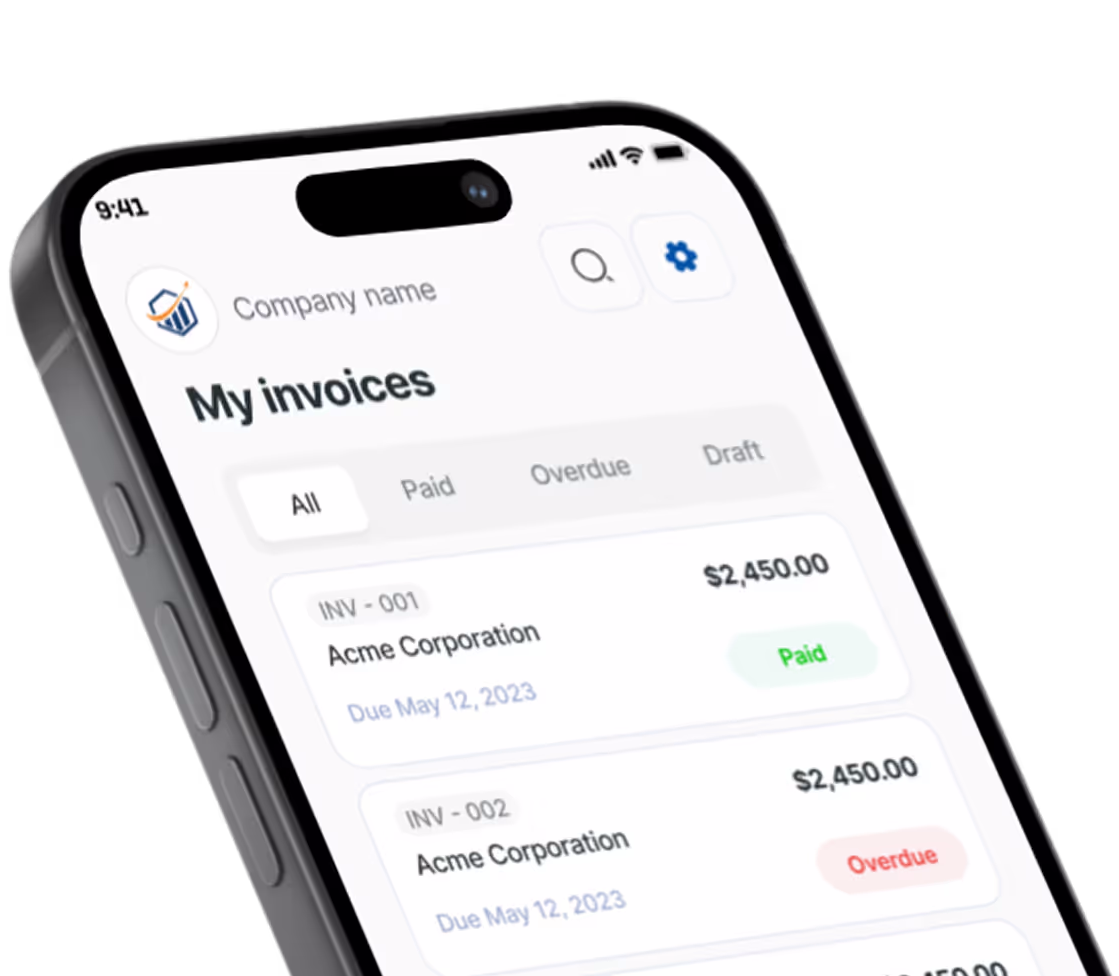
Once your worksheet is done, save your labor rate, trip charge, and common parts as line items in Pronto Invoice. When you build a quote or invoice, you pick the client, pick the saved items, and the totals fill in the same way every time. It also works on your phone, so you can send it before you leave the driveway. Pronto does not touch your payments. You connect your own Stripe or PayPal and keep whatever rate you negotiated. Tiers and limits are published up front; try it at prontoinvoice.com.
Your next step is small: run the worksheet tonight, compare the result to your last five invoices, and fix the biggest gap first.
There is always something more to read

10 Steps to Set Up a Small Business: The Complete Startup Checklist for 2025
Learn 10 steps to set up a small business with this checklist covering LLC, banking, invoicing, insurance, and pricing.

1099 Requirements for Small Business (2026): Complete Guide
$600 threshold is now $2,000 for 2026. Learn 1099 requirements: 1099-NEC, W-9 rules, deadlines, filing.

How to Accept Payments Online
No website needed. Here is how to start accepting online payments as a small business — processors, payment links, and invoicing in one afternoon.